Black peak expedition
Overview
Black Peak Expedition
Black Peak, also known as Kalanag, is a 6,387-meter high mountain in the Garhwal Himalayas of Uttarakhand. The name Kalanag means “Black Serpent,” inspired by the summit ridge that resembles a raised cobra hood.
This is an advanced-level mountaineering expedition, ideal for experienced climbers aiming to step into serious Himalayan technical climbing. The route involves glacier travel, steep snow and ice slopes, crevasse navigation, and a sharp exposed summit ridge.
The expedition usually takes 16–20 days, starting from Dehradun and moving towards the Sankri region before trekking to base camp. Climbers establish multiple high camps for acclimatization before making the final summit push.
What makes the Black Peak Trek special?
Black Peak, also known as Kalanag, is special because it offers the complete Himalayan experience — a powerful combination of scenic trekking, remote wilderness, and serious technical climbing. Rising to 6,387 meters in the Garhwal Himalayas, the mountain gets its name from its striking summit ridge that resembles a black cobra raising its hood, giving it a dramatic and mythical presence. The expedition begins through beautiful alpine meadows and isolated valleys, gradually leading to glaciers and steep snow slopes that test a climber’s endurance and skill. The final summit ridge is sharp and exposed, demanding focus and confidence, while rewarding climbers with breathtaking views of giants like Swargarohini and Bandarpunch. More than just a climb, Black Peak is a respected milestone in Indian mountaineering — a mountain that challenges you physically, mentally, and emotionally, and leaves you transformed by the time you stand on its summit.
Read Our
Short Itinerary
Dehradun to Sankri.
Sankri to Seema via Dhatmeer.
Seema to Rainbasera
Rainbasera to Ruinsara Tal
Ruinsara Tal to Kyarkoti (Base Camp)
Base Camp to Advanced Base Camp (ABC)
Rest/ Acclimatization/ Load Ferry
Advanced Base Camp (ABC) to Camp 1
Camp 1 to Summit Camp
Summit Camp to Summit Attempt (Black Peak)
Summit Camp to Base Camp
Kyarkoti Base Camp to Ruinsara Tal
Ruinsara Tal to Seema
Seema to Dhatmeer and Drive to Sankri
Drive to Dehradun
Read Our
Detailed Itinerary
Day 01: Dehradun to Sankri
Your journey begins with a scenic drive from Dehradun to Sankri, passing through Mussoorie, Purola, and Mori. The road runs alongside the Tons and Supin rivers, offering beautiful mountain views and glimpses of local Garhwali life.
On arrival, check into a guesthouse, meet the trek leader, and attend a briefing & gear check. Evening acclimatization walk around Sankri village.
Day 02: Sankri to Seema via Dhatmeer
A short mountain drive takes you to Dhatmeer. From here, the real expedition begins.
The trail follows the Supin River, cutting through dense forests and traditional wooden Himalayan villages. The terrain is gradual but steady. You pass through lush meadows and small settlements before reaching Seema — a scenic riverside campsite.
Tonight, the sound of flowing water replaces traffic noise.
Day 3: Seema to Rainbasera
The trail now starts gaining altitude. You move deeper into the Govind National Park region. Forests grow denser, and the mountains appear closer.
You may spot Himalayan birds and mountain goats along the route. Rainbasera is a beautiful meadow campsite surrounded by towering peaks.
Acclimatization becomes important from here onward.
Day 4: Rainbasera to Ruinsara Tal
Today you reach the stunning Ruinsara Tal, a sacred high-altitude glacial lake.
The trail opens into vast alpine meadows. Snow peaks begin to dominate the horizon. Ruinsara Tal sits quietly, reflecting the surrounding mountains like a mirror.
This is one of the most beautiful camps of the expedition. The energy shifts — you now feel truly inside the Himalayas.
Day 5: Ruinsara Tal to Kyarkoti (Base Camp
The terrain becomes rugged and moraine-filled. Vegetation starts thinning. Snow patches may appear depending on the season.
Kyarkoti serves as your Base Camp — a vast high-altitude meadow surrounded by glacier systems and massive peaks.
From here onward, mountaineering begins.
Day 6: Base Camp to Advanced Base Camp (ABC)
ou move through glacial moraine and rocky terrain. The walk is slower, and breathing becomes heavier.
Advanced Base Camp is positioned strategically for summit rotations. The atmosphere becomes colder and harsher.
Technical gear checks begin from this point.
Day 7: Rest / Acclimatization / Load Ferry
A crucial day.
The team may:
-
Do load ferry to higher camp
-
Practice ice craft
-
Short acclimatization hikes
-
Rest and monitor oxygen levels
Day 8: Advanced Base Camp to Camp 1 (5,050m/16,500ft)
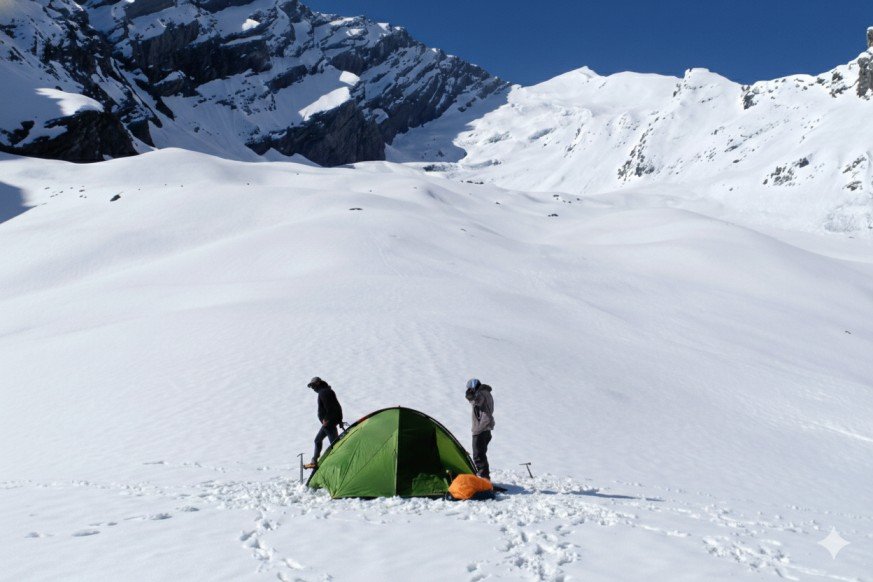
The climb now enters snow and glacier terrain where crampons and ropes may be required. Although the distance is short, the ascent is steep and physically demanding. Camp 1 is established on a secure snow platform. Night temperatures drop significantly, and strong winds are common.
Day 9: Camp 1 to Summit Camp (5,500m/18,000ft)
The climb becomes more technical, often involving fixed ropes depending on snow conditions. The gradient increases and the exposure becomes evident. Summit Camp is minimal and highly exposed, requiring mental focus and discipline. Rest is essential as the summit push begins around midnight.
Day 10: Summit Attempt – Black Peak (6,387m/20,950ft)
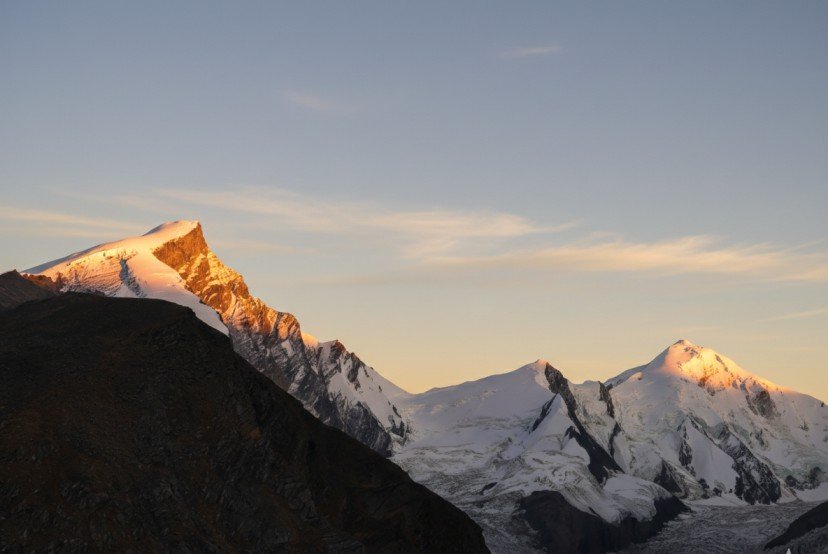
The summit push starts around 1 to 2 AM under a sky full of stars. The climb involves steep snow slopes and a sharp summit ridge. As dawn breaks, the Garhwal Himalayas glow in golden light, offering a surreal and unforgettable view. Reaching the summit of Black Peak is a moment of immense achievement, representing strength, endurance, and determination. After spending some time at the top for photographs and celebration, the descent begins carefully back to Summit Camp.
Day 11: Summit Camp to Base Camp (4,050m/13,300ft)
A long descent across glaciers and moraines brings you back to Kyarkoti Base Camp. Oxygen levels feel better as you descend, and the body gradually relaxes. Reaching Base Camp provides comfort after the intense summit effort.
Day 12: Base Camp to Ruinsara Tal (3,600m/11,800ft)
The descent feels smoother and lighter. Energy levels begin to recover as you return to the scenic Ruinsara Tal campsite. The lake feels different now, as summit achievers return with pride.
Day 13: Ruinsara Tal to Seema (2,600m/8,500ft)
This is a long descent through meadows and dense forest trails. The rich oxygen at lower altitude feels refreshing. By evening, you reach Seema and enjoy the comfort of lower camps once again.
Day 14: Seema to Dhatmeer and Drive to Sankri.
You trek 10 km back to Dhatmeer in about 5 hours and then drive 18 km to Sankri in 1 to 1.5 hours. Reaching Sankri marks the completion of the expedition journey in the mountains. A warm meal, hot shower, and team celebration conclude the mountain chapter.
Day 15: Sankri to Dehradun
he return drive retraces the scenic mountain roads back to Dehradun. As the Himalayas slowly disappear behind you, the sense of achievement remains strong. This expedition is not just about climbing a peak but about pushing limits and discovering inner strength in the heart of the Garhwal Himalayas.
Black Peak Expedition
Key Highlights
-
Total Trek Distance: ~98 km -
Summit at 20950 Ft. -
Duration : 15 Days -
Grade: Challenging
For Any Queries
-
+91 78955 68363 -
+91 78955 68363
Cost Inclusions:
-
Transportation: Dehradun to Dehradun as per the itinerary
-
Meals: All meals from Day 1 onwards during the trek and at guesthouses
-
Accommodation: Guesthouse stays and high-quality camping arrangements
-
Camping Equipment: Tents, mattresses, and sleeping bags suitable for high-altitude conditions
-
Toilet Facilities: Dry pit-style toilet tents at campsites
-
Kitchen Setup: Dedicated kitchen tent with all equipment and rations
-
Trek Leadership: Certified trek leader assisted by an experienced assistant trek leader / local guide
-
Support Team: Trained high-altitude support staff
-
Cook & Helpers: Experienced mountain cook and camp helpers
-
Logistics Support: Porters / mules for carrying common equipment and supplies
-
Qualified Leadership: Mountaineering course–certified trek leader for technical sections
-
Local Expertise: Local support team providing on-ground geographical and route intelligence
-
Technical Gear: Crampons or micro-spikes provided to trekkers if required
Cost Exclusions:
-
Personal Luggage: Mules or porters for carrying individual personal luggage
-
Emergency Evacuation: Any costs related to emergency evacuation, rescue, or medical services
-
Early Exit from Trek: Expenses incurred if a participant leaves the trek before completion due to personal reasons, health issues, or any other cause
-
Personal Requests: Any additional services such as a personal guide, special meals, personal porter, or private vehicle
-
Unspecified Items: Anything not explicitly mentioned under the “Inclusions” section
Clothing essential
- Thermal Wear (upper and lower)
-
Insulated Jackets:
-
1 Fleece jacket
-
1 Down feather jacket
-
-
Warm Innerwear
-
Gloves:
-
1 Pair woollen gloves
-
1 Pair waterproof gloves
-
-
Trekking Pants: 2 pairs (comfortable for full-day trekking)
-
T-Shirts: 4 in total
-
2 Full-sleeve
-
2 Half-sleeve
-
-
Sweaters:
-
1 Fleece
-
1 Woollen
-
-
Socks: 5 pairs
-
3 Cotton
-
2 Woollen
-
-
Rain Protection: Raincoat or poncho
-
Personal Items: Handkerchiefs and towels
Booking from rental
● Poncho – Rs. 200
● Gloves – Rs. 200
● Head torch – Rs. 150
● Trekking Shoe – Rs. 500
● Gopro – Rs. 2500
● Winter jacket- Rs. 500
● Trekking pole – Rs. 200
● Trek pant – Rs. 400
How to reach
By Air
-
Jolly Grant Airport (DED) serves Dehradun and is located approximately 25 km from the city.
-
There are daily direct flights from Delhi to Dehradun.
By Train
You can take an overnight train from Delhi to Dehradun. Recommended options include:
-
Nanda Devi Express (Train No. 12205)
-
Departure: 11:50 PM | Arrival: 5:40 AM
-
-
Dehradun Express (Train No. 12687)
-
Departure: 9:10 PM | Arrival: 5:00 AM
-
By Bus
-
Regular bus services operate from ISBT Kashmere Gate, Delhi to Dehradun.
-
We strongly recommend using government buses only from ISBT Kashmere Gate.
-
Private buses operating outside ISBT are not considered reliable.
-
Buses usually drop passengers at Dehradun ISBT. From there, proceed to Dehradun Railway Station.
Pickup & Transfer to Sankri
-
Pickup Point: Dehradun Railway Station
-
Pickup Time: 7:00 AM
-
Transport Provider: Hiking Trail vehicles
-
Pickup Cost: Included in the trek fee
-
Expected Arrival at Sankri: Around 6:00 PM
- Thermal Wear (upper and lower)
-
Insulated Jackets:
-
1 Fleece jacket
-
1 Down feather jacket
-
-
Warm Innerwear
-
Gloves:
-
1 Pair woollen gloves
-
1 Pair waterproof gloves
-
-
Trekking Pants: 2 pairs (comfortable for full-day trekking)
-
T-Shirts: 4 in total
-
2 Full-sleeve
-
2 Half-sleeve
-
-
Sweaters:
-
1 Fleece
-
1 Woollen
-
-
Socks: 5 pairs
-
3 Cotton
-
2 Woollen
-
-
Rain Protection: Raincoat or poncho
-
Personal Items: Handkerchiefs and towels
● Poncho – Rs. 200
● Gloves – Rs. 200
● Head torch – Rs. 150
● Trekking Shoe – Rs. 500
● Gopro – Rs. 2500
● Winter jacket- Rs. 500
● Trekking pole – Rs. 200
● Trek pant – Rs. 400
By Air
-
Jolly Grant Airport (DED) serves Dehradun and is located approximately 25 km from the city.
-
There are daily direct flights from Delhi to Dehradun.
By Train
You can take an overnight train from Delhi to Dehradun. Recommended options include:
-
Nanda Devi Express (Train No. 12205)
-
Departure: 11:50 PM | Arrival: 5:40 AM
-
-
Dehradun Express (Train No. 12687)
-
Departure: 9:10 PM | Arrival: 5:00 AM
-
By Bus
-
Regular bus services operate from ISBT Kashmere Gate, Delhi to Dehradun.
-
We strongly recommend using government buses only from ISBT Kashmere Gate.
-
Private buses operating outside ISBT are not considered reliable.
-
Buses usually drop passengers at Dehradun ISBT. From there, proceed to Dehradun Railway Station.
Pickup & Transfer to Sankri
-
Pickup Point: Dehradun Railway Station
-
Pickup Time: 7:00 AM
-
Transport Provider: Hiking Trail vehicles
-
Pickup Cost: Included in the trek fee
-
Expected Arrival at Sankri: Around 6:00 PM
Frequently Asked Questions
1.1. Where is Black Peak located?
Black Peak, also known as Kalanag, is located in the Govind Pashu Vihar National Park region of Uttarakhand in the Garhwal Himalayas. The expedition begins from Sankri village near Dehradun.
2. What is the height of Black Peak?
Black Peak stands at an altitude of 6,387 meters (20,950 feet), making it one of the highest and most demanding trekking peaks in Uttarakhand..
3. What is the total duration of the expedition?
The expedition is 15 days long, including travel from Dehradun, acclimatization days, summit attempt, and return journey.
4. What level of fitness is required?
This is a technical mountaineering expedition and requires excellent physical fitness. Participants should be capable of trekking 6–8 hours daily at high altitude and should have prior high-altitude trekking experience above 4,500 meters.
5. How difficult is the summit climb?
The summit involves steep snow slopes, glacier crossings, and ridge climbing. The final ascent can be physically demanding and technically challenging depending on snow conditions. Proper acclimatization and guidance are crucial.